Why Oregon's Two Climate Zones Change Your Attic Insulation

Attic insulation advice written for the whole country tends to miss Oregon, because Oregon is not one climate. The state spans two distinct zones with meaningfully different attic realities, and the right approach in Portland is not the same as the right approach in Bend. A homeowner who understands which zone their house sits in makes a better decision about insulation type and how much to add. Klaus Roofing Systems of Oregon works with attic efficiency across the state as an Attic Systems dealer, and the two-zone reality shapes the recommendation every time.

The split is not a technicality. It changes which insulation performs, what the main risk is, and how fast the upgrade pays back. Here is what each zone means for the attic overhead.

Zone 4C Marine: the wet side of the state

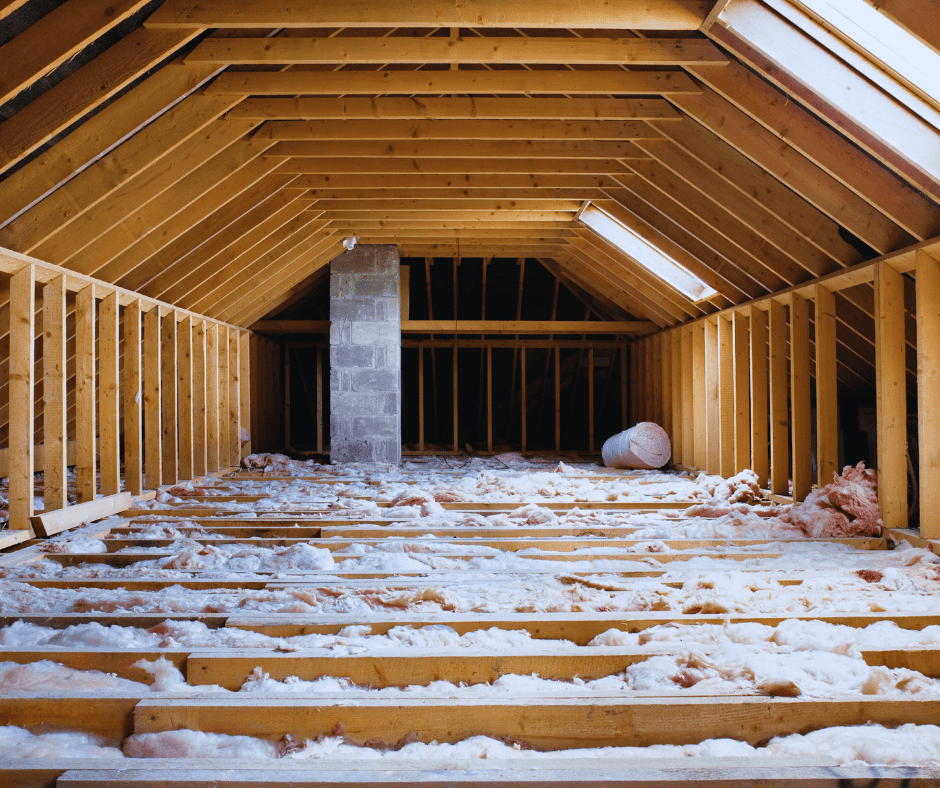
Zone 4C, the Marine zone, covers the Portland metro, the Willamette Valley cities of Salem, Eugene, Corvallis, and Albany, the Oregon Coast, and Southern Oregon around Medford, Ashland, Grants Pass, and Roseburg. This zone runs about 5,000 heating degree days a year, with wet winters and mild summers. The defining attic risk here is not extreme cold. It is chronic low-grade moisture, weeks and months of dampness sitting inside attic assemblies that are not detailed to shed it. That moisture condenses against cold surfaces, feeds mold and rot, and degrades the assembly from the inside.

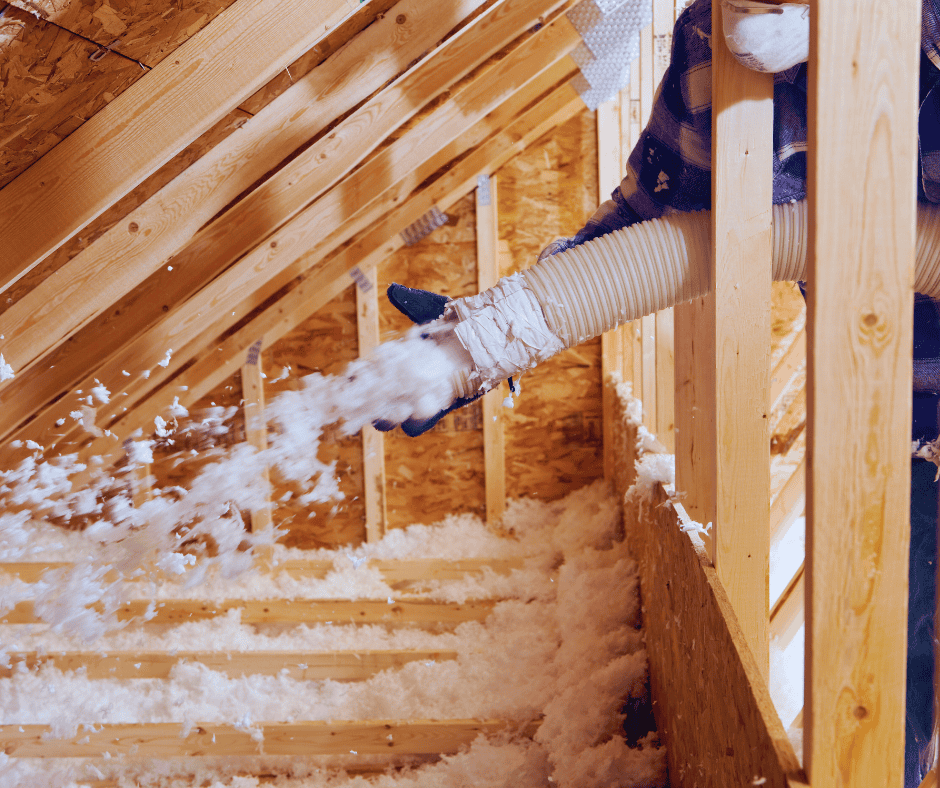
Because moisture is the enemy in Zone 4C, material choice matters. Blown-in cellulose and closed-cell spray foam handle Oregon's damp better than fiberglass batts on a retrofit, which is why they are the common recommendation across the wet side of the state. The goal is an assembly that manages moisture, not just one that hits an R-value on paper.

Oregon is two climate zones

Zone 4C Marine covers Portland, the Willamette Valley, the Coast, and Southern Oregon, while Zone 5B Cool-Dry covers Bend, Central Oregon, and Eastern Oregon.

Moisture versus cold:

Zone 4C's main attic risk is chronic moisture inside assemblies, while Zone 5B faces colder winters and real ice dam potential at higher elevations.

Higher R-value pays back faster east of the Cascades

Zone 5B runs about 6,500 heating degree days a year versus about 5,000 in Zone 4C, so the same attic loses more over a colder winter.

Zone 5B Cool-Dry: the high desert and the east

Zone 5B, the Cool-Dry zone, covers Central Oregon, Bend, Redmond, Sisters, Sunriver, La Pine, and Prineville, and Eastern Oregon, Baker City, La Grande, Ontario, and Klamath Falls. This zone runs about 6,500 heating degree days a year, with colder winters, drier air, and larger day-to-night temperature swings. The main attic concerns shift. Moisture is less of a driver, but cold is more of one, and at Central Oregon's higher elevations ice dams become a real problem, where meltwater refreezes at the eaves and pushes water back under the roof edge.

In Zone 5B, higher R-values pay back faster, because the heating load runs longer and colder than on the wet side of the state. A home in Bend loses more through an under-insulated attic over a winter than the same home would in Eugene, so the case for reaching and exceeding R-49 is even stronger. The dry air also means fiberglass performs more predictably than it does in the marine zone, though cellulose remains a strong default.

Why one-size advice fails here

The reason this matters is that generic insulation advice, and even some regional contractors, treat Oregon as either Portland or Bend rather than both. A moisture-first strategy built for the Willamette Valley can under-serve a cold, high-desert home, and a cold-first strategy built for Central Oregon can ignore the condensation risk that defines a coastal or valley attic. Matching the material and the R-value target to the actual zone, and to the specific home within it, is what separates a retrofit that performs from one that just adds depth.

What both zones share

For all their differences, the two zones agree on the fundamentals. Oregon's code sets attic minimums at R-49 for flat ceilings and R-30 for vaulted ceilings statewide. Air sealing matters everywhere, because insulation slows heat through surfaces but does not stop air leaking through gaps at attic hatches, top plates, can lights, and penetrations. And ventilation matters in both zones, since a balanced attic that breathes keeps moisture from condensing in the west and helps manage temperature in the east. The Energy Trust of Oregon rebate, roughly $0.75 to $2.25 per square foot on qualifying retrofits, is also available statewide to customers of participating utilities, subject to eligibility. Homeowners weighing a project can learn how attic insulation in Oregon is matched to a home's zone and condition.

Insulation matched to your zone

Klaus Roofing Systems of Oregon is a family-owned and locally operated contractor, licensed in Oregon under Contractor ID 231578, with OSHA-compliant crews and an Attic Systems dealer authorization. Attic work starts with a free in-person assessment that reads the home's zone, existing R-value, air leakage, and moisture conditions, then puts a written plan and price on paper. The company installs cellulose, rigid foam, and spray foam, handles air sealing and duct sealing, documents before and after depth, and offers financing. Rebate eligibility and current terms should be confirmed at the time of the project, and there is no federal attic tax credit to rely on for 2026 since the federal 25C credit expired at the end of 2025.

Whether a home sits in the wet Marine zone or the cold high desert, the right insulation starts with knowing which Oregon a house lives in. Homeowners can call Klaus Roofing Systems of Oregon at 541-275-2202 for a free in-person attic assessment.

Redirect to:


Redirect to:


In Zone 4C Marine, which covers Portland, Salem, Eugene, the Coast, and Southern Oregon, the defining risk is chronic moisture inside attic assemblies. Blown-in cellulose and closed-cell spray foam handle that damp better than fiberglass batts on a retrofit, so they are the common recommendation on the wet side of the state.
Yes. Zone 5B Cool-Dry, which covers Bend, Redmond, and Eastern Oregon, has colder winters, drier air, and real ice dam potential at higher elevations. Higher R-values pay back faster there because heating loads run longer and colder, so reaching and exceeding R-49 makes an even stronger case.
Oregon's code sets attic minimums at R-49 for flat ceilings and R-30 for vaulted ceilings statewide for new construction. Existing homes are not required to retrofit to code, but hitting R-49 is where most Oregon homeowners in either zone get the strongest energy return.